To paraphrase the great Mark Twain ‑ news of the death of the Midwest as a fantastic place to hunt deer has been greatly exaggerated.
Despite all the doom and gloom you might have heard the past couple of years about how horrible things have gotten in the Midwest, it’s nowhere near as bad as described. (For purposes of this discussion, we’re defining the Midwest the same way the U.S. Census Bureau does ‑ Illinois, Indiana, Iowa, Kansas, Kentucky, Michigan, Minnesota, Missouri, Nebraska, North Dakota, Ohio, South Dakota and Wisconsin.)
Is the hunting as good as it was 10 years ago? No. But it’s still pretty good. And it’s certainly better than the deer hunting in a lot of other places around the country. I live and hunt in Pennsylvania. Last season, I spent 30-some days in the field there chasing whitetails with bow and gun. In accordance with the state’s rules, I can only shoot one buck per year, and in my area, that buck must have at least three points on one antler to be legal. In all that time hunting three pieces of private property totaling about 1,500 acres, I saw a total of three bucks. Two of them were legal, and both of those were 1.5-year-old six-pointers. I could have shot both of them, but I had no desire to.
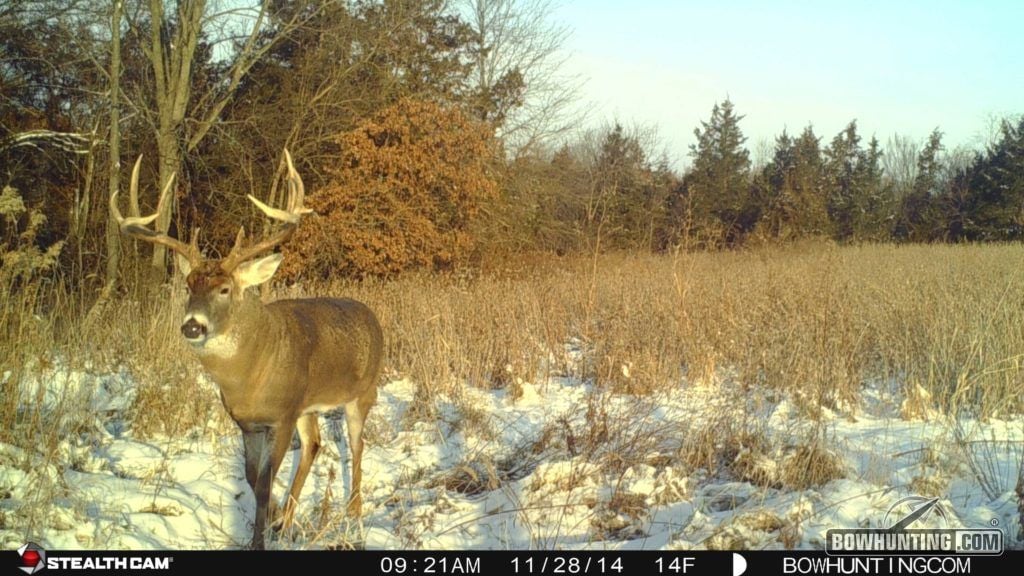
Trail cam photos like this one confirm that the Midwest is definitely not dead.
As I do every season, I spent a week in late October-early November in Illinois, bowhunting with Illinois Whitetail Services. I then hunted with the same outfitter again for the state’s first shotgun season later in November. The first morning of my bowhunt, I blew a chance at a 150-inch nine-pointer, and saw five other bucks that day, including one other shooter. The next day, I saw several more bucks, and tagged a 130-class eight-pointer. During the shotgun season, I saw a total of 16 bucks over two days and shot a wide eight-pointer the afternoon of the second day.
So my four days in Illinois, hunting ground that sees more pressure than my private property in Pennsylvania, were far better than the 30 I spent hunting at home, where most of my days ended without a single deer sighting. But I’m just one guy, and we certainly shouldn’t base the quality of the hunting in a whole region on the experiences of one guy. So let’s look at the numbers.
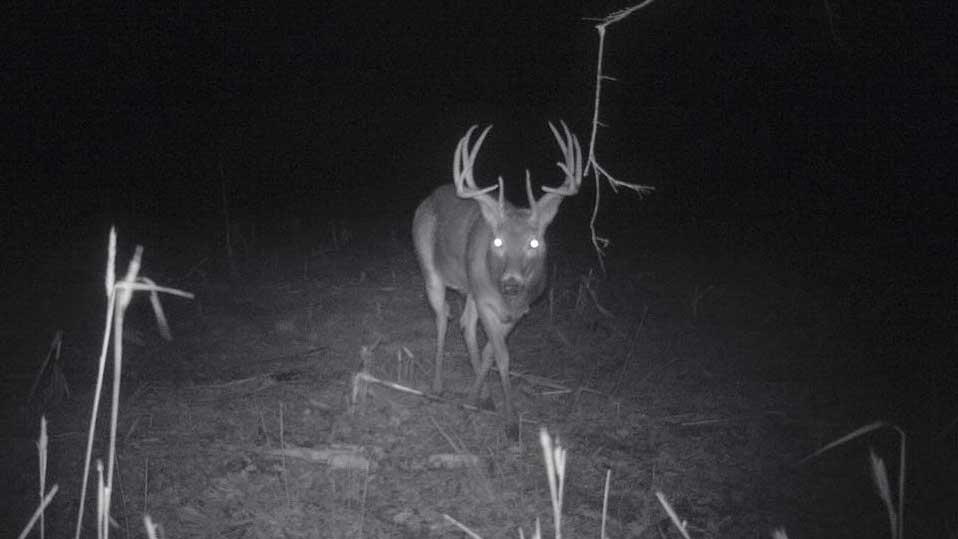
This buck sauntered in front of an Illinois Whitetail Services trail camera in December 2014 in southern Illinois.
It is true, deer kills are down across the Midwest. According to the Quality Deer Management Association’s 2015 Whitetail Report, which used 2013-14 hunting season data as its most recent, 11 of the 13 Midwest states showed declines in buck harvests from 2012-13 to 2013-14. And Indiana’s kill only increased by 1 percent, while Kentucky’s rose by just 6 percent.
In comparing the 2013-14 kill to the 2011-12 season, once again, only two states showed an increase: Minnesota and Kentucky. And the numbers generally have been trending down for several years. Take Illinois, for example. In 2005, hunters in the Land of Lincoln bagged about 81,000 bucks. In 2013, that number was about 57,000. In Wisconsin, hunters tagged some 183,000 bucks in 2005, as compared to about 143,000 in 2013.
In discussing the state of deer hunting in the U.S. in its 2015 report, QDMA offered this observation:
“One of the biggest issues facing hunters in the Midwest right now is significantly reduced deer harvests. Some states’ buck harvests have declined more than 40 percent during the past decade,” the report states. “Not to be outdone, even more states’ antlerless harvests have declined by more than 40 percent during this time period. Harvest declines of this magnitude are extremely noticeable by hunters, and state wildlife agencies are bearing the brunt of their frustrations.
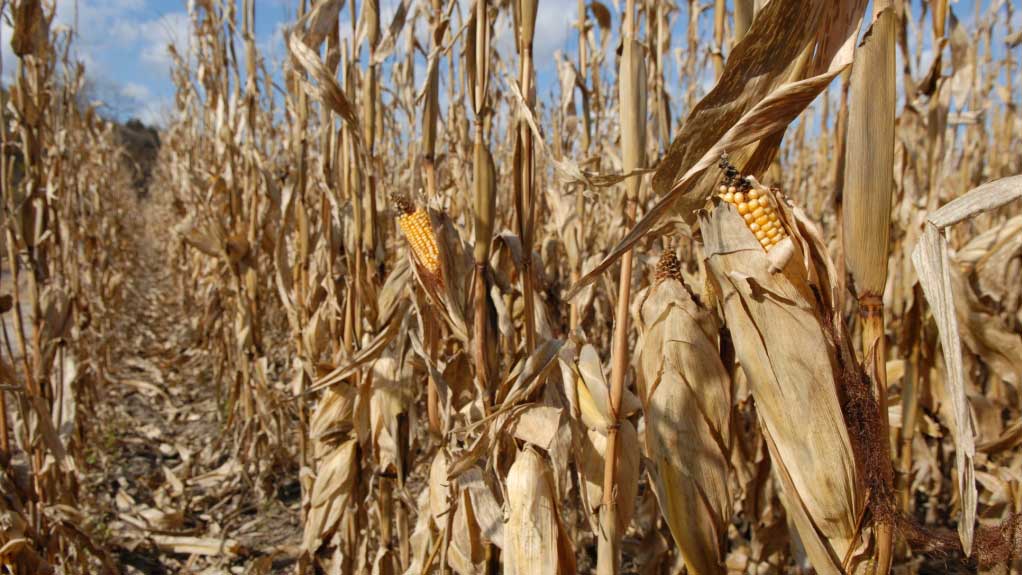
As the “bread-basket” of America, the Midwest has some of the best deer food found on the planet.
Ailments like chronic wasting disease (CWD) and epizootic hemorrhagic disease (EHD), predation by coyotes and wolves in the far northern states, combined with efforts by state agencies to reduce deer populations all seem to have converged within the last decade to pull deer numbers down across the Midwest, according to various organizations. And when deer numbers are down, it’s only natural that the number of deer shot by hunters is going to decline, as well.
But all of that doesn’t necessarily mean the deer hunting stinks. As I noted, my 2014 Illinois hunting experience blew my Pennsylvania hunting out of the water. And Pennsylvania is a place where the buck kill increased from 2012 to 2013.
“People think the Midwest is dead,” said Doug Doty, owner of Illinois Whitetail Services. “They’ve read so much negative stuff about it, that it’s hard to get guys to come out and book hunts. But I’m here to tell you, we still have some pretty awesome hunting. It might not be as good as it was, but it’s still pretty incredible.”
The trophy record books seem to confirm the idea that the Midwest is not dead. The Boone & Crockett Club has the only searchable, online record book, so we used that one for our analysis. Also, it’s harder to get a buck into the Boone & Crockett club’s books than it is the Pope & Young Club’s books, which only chart bowhunting records. That’s because the Boone & Crockett minimum scores are substantially higher than the Pope & Young minimums.
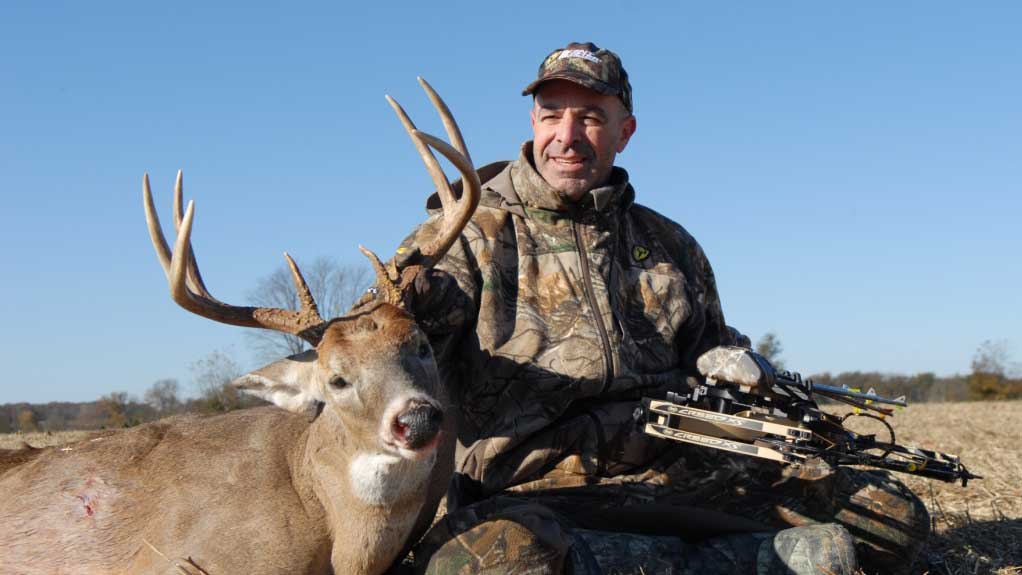
The author shot this decent eight-pointer while hunting with Illinois Whitetail Services on Halloween 2014.
Wildlife populations generally follow a pyramid when it comes to numbers of record-class animals. Places that have lots of big bucks are going to be the places that have the most bucks. That’s because, in simple terms, it takes an awful lot of small bucks to produce a fair number of big bucks.
Anyway, according to the Boone & Crockett records, the top-seven producers of record-class typical bucks from 2011-14 all were Midwest states. In order from 1-7, they are Wisconsin, Kentucky, Ohio, Iowa, Illinois, Indiana, and Minnesota. On the non-typical side, the top eight producers all were Midwest states ‑ Wisconsin, Ohio, Illinois, Iowa, Kansas, Kentucky, Indiana, and Missouri. So even with reduced, annual deer kills, the Midwest still ranks as the best place in North America to tag a trophy buck. And if they’ve got lots of trophy bucks, you know they’re going to have plenty of lesser bucks too.
In the end, what made the Midwest great 10 years ago hasn’t changed. “Our soil is incredible and so our natural vegetation is very high quality,” said Tom Litchfield, deer project biologist with Iowa Department of Natural Resources. “Then you’ve got all the farm crops produced on our land. And, of course, our genetics are excellent.”
Maybe your odds of killing a Booner in Illinois aren’t as good today as they were 10 years ago, but they’re still better than they are in places like Idaho, Montana, or Pennsylvania. And if a state like Wisconsin leads the Boone & Crockett Club’s record book in both the typical and non-typical categories, it’s probably going to be a darn good place to shoot a respectable, 130-class buck. Make no mistake, the Midwest is certainly not dead when it comes to big whitetail bucks.